I’m continuing to cook India-inspired food after getting home from a trip. We enjoyed dal makhani with chapatis enough that I’ve already made it twice (though it’s rich enough that I shouldn’t too often…). For a recent dinner party, we put together a few dishes that worked well together, so I’m jotting down a few notes to remind myself in the future (caveat: these are more haphazard / incomplete ‘recipes’ than usual):
- Dal Makhani (buttery urad dal / black gram)
- Chapatis (simple stovetop flatbreads)
- Aloo Bombay (dry fried potatoes with spices)
- Oven-Roasted Broccoli with Indian Spices
- Salt Lassis
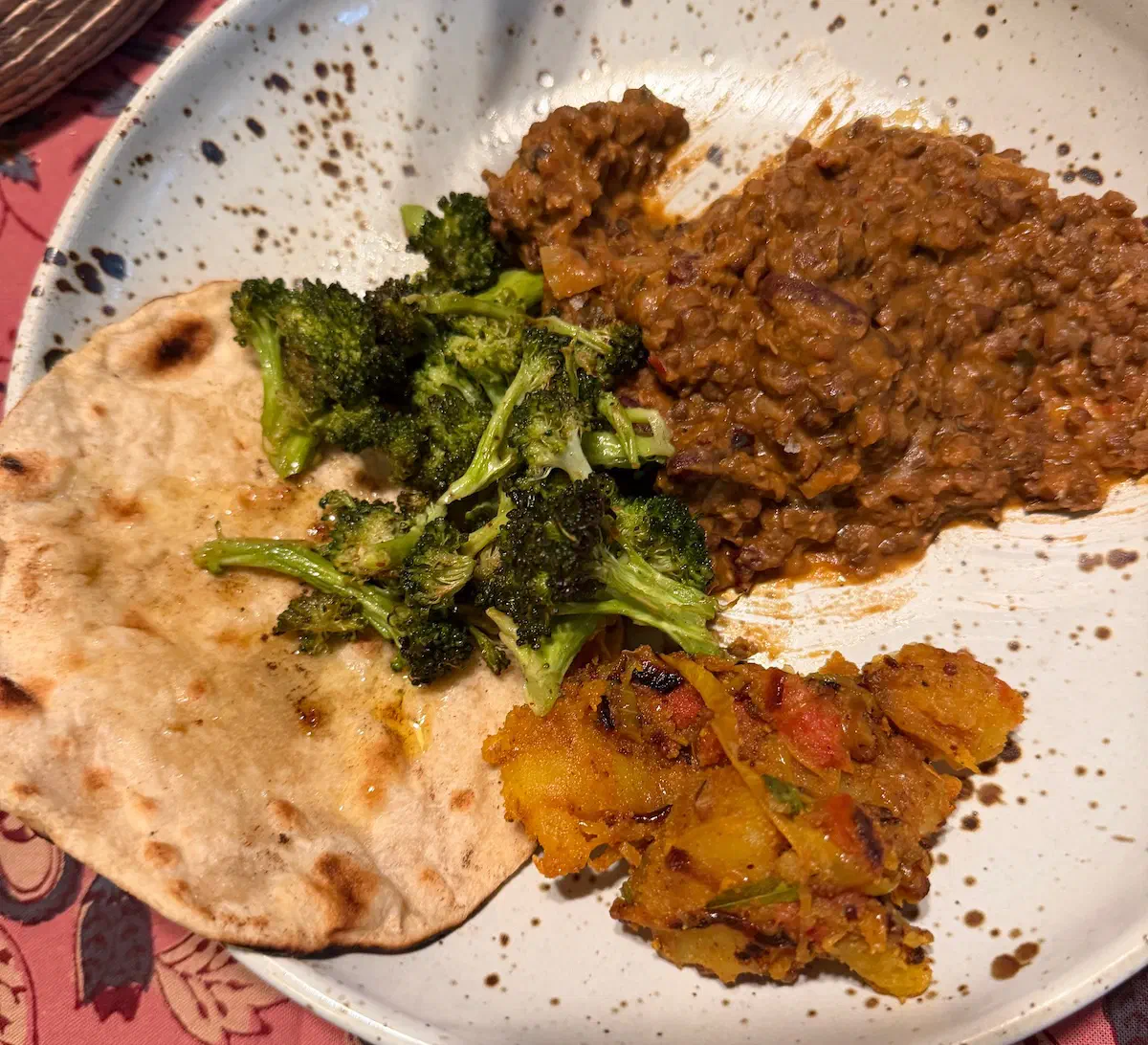
Alas, I forgot to take photos of the food laid out nicely on the table other than this one blurry plate snapshot:
Dal Makhani
Oddly, neither of our Indian cookbooks had a recipe for this, but the first two results from a Google search and a tip from a friend who’s cooked this pointed us in a useful direction.
Key elements of this include using urad dal, cooking it for an absurdly long time (4-5 hours stovetop), and loading it with plenty of butter at the end.
For a double batch (~10 servings):
- 2 cups whole urad dal, soaked overnight (I’ve also tried a one-hour soak in a pinch, and with hours of cooking time the result was still delicious and fully cooked, but the texture wasn’t quite as creamy)
- 1/2 cup dry kidney beans, soaked with the dal (most recently I didn’t have any, so added a can of kidney beans when I added the cooked dal to the onions)
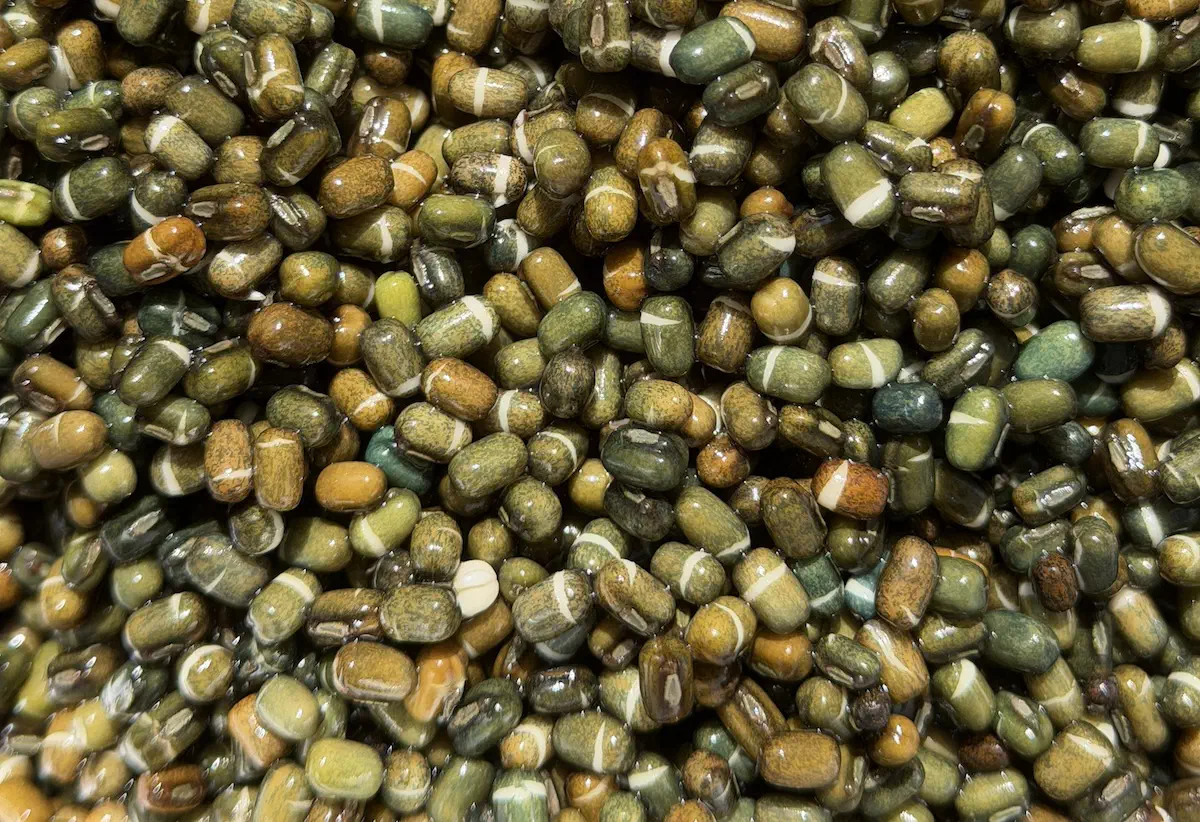
About 4-5 hours before dinner, drain the urad dal, cover with ~8 cups fresh water, and simmer until cooked / fairly soft (this took 90-120 minutes stovetop, it would be faster if I had a pressure cooker).
When the dal is getting close to soft:
- Melt ghee in a large pot over medium-high
- Quickly fry 8 green cardamom pods and 2 bay leaves
- Sautee one large diced onion until light brown
- Add a lot of grated fresh ginger and garlic (maybe ‘2 inches’ grated ginger root, and one head of garlic, crushed) and cook a few minutes until fragrant and golden, stirring and moderating heat to avoid burning the garlic
- Add ~15oz of pureed tomatoes (fresh, or a can of crushed/pureed tomatoes)
- Add 1-2 Tbsp garam masala and ~2 tsp of fairly hot ground chiles and stir and cook until melded, maybe 5 minutes
Add the softened dal, its cooking juices, a can of kidney beans (if dry beans weren’t added to the dal), and about a cup of water.
Low simmer the mixture until creamy-soft, another 2-3 hours! I was doing other cooking, cleaning up, and work in parallel but set a timer to remind me to stir it every 10-15 minutes to avoid sticking. Whenever it was getting too thick I added a cup of hot water from the kettle (in the future I may try simmering it covered).
When it’s creamy-soft and the rest of dinner is ready, about 10min before serving:
- Add crushed methi (fenugreek leaves)
- Recipes say to add a splash of cream, which was good but I think unnecessary (and we don’t generally keep cream in the fridge)
- Stir in a hearty amount of butter (6-8 Tbsp, no need to use expensive ghee as it won’t get to a high heat that could burn butter solids), simmer another 5-10min so soften/meld the methi
- Salt significantly to taste (I’ve had inconsistent experience / opinions about whether adding salt early prevents legumes from getting as soft, but in general cooking with dry legumes I just salt near the end, though I could likely salt when I add the softened dal earlier)
- Add a bit more water if desired to thin the texture
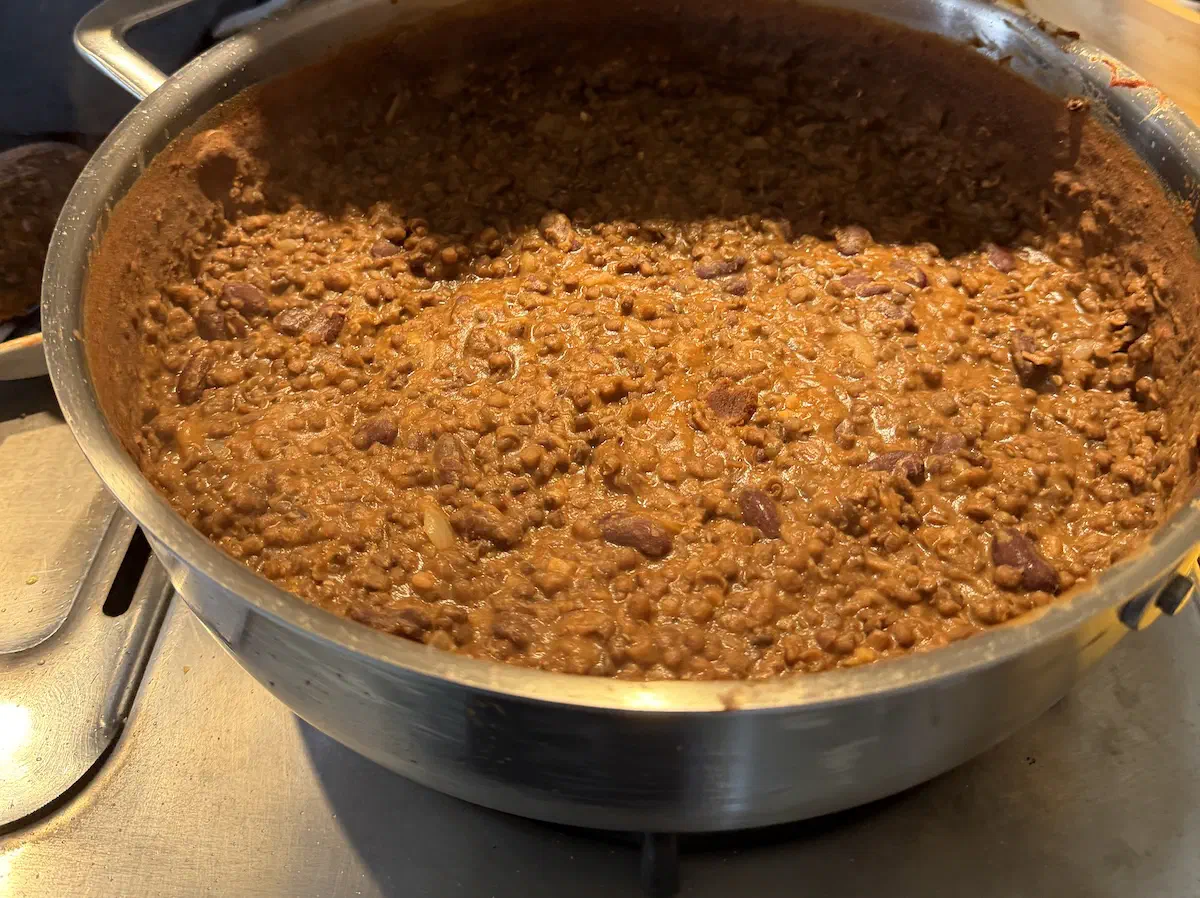
Serve with flatbreads! For example…
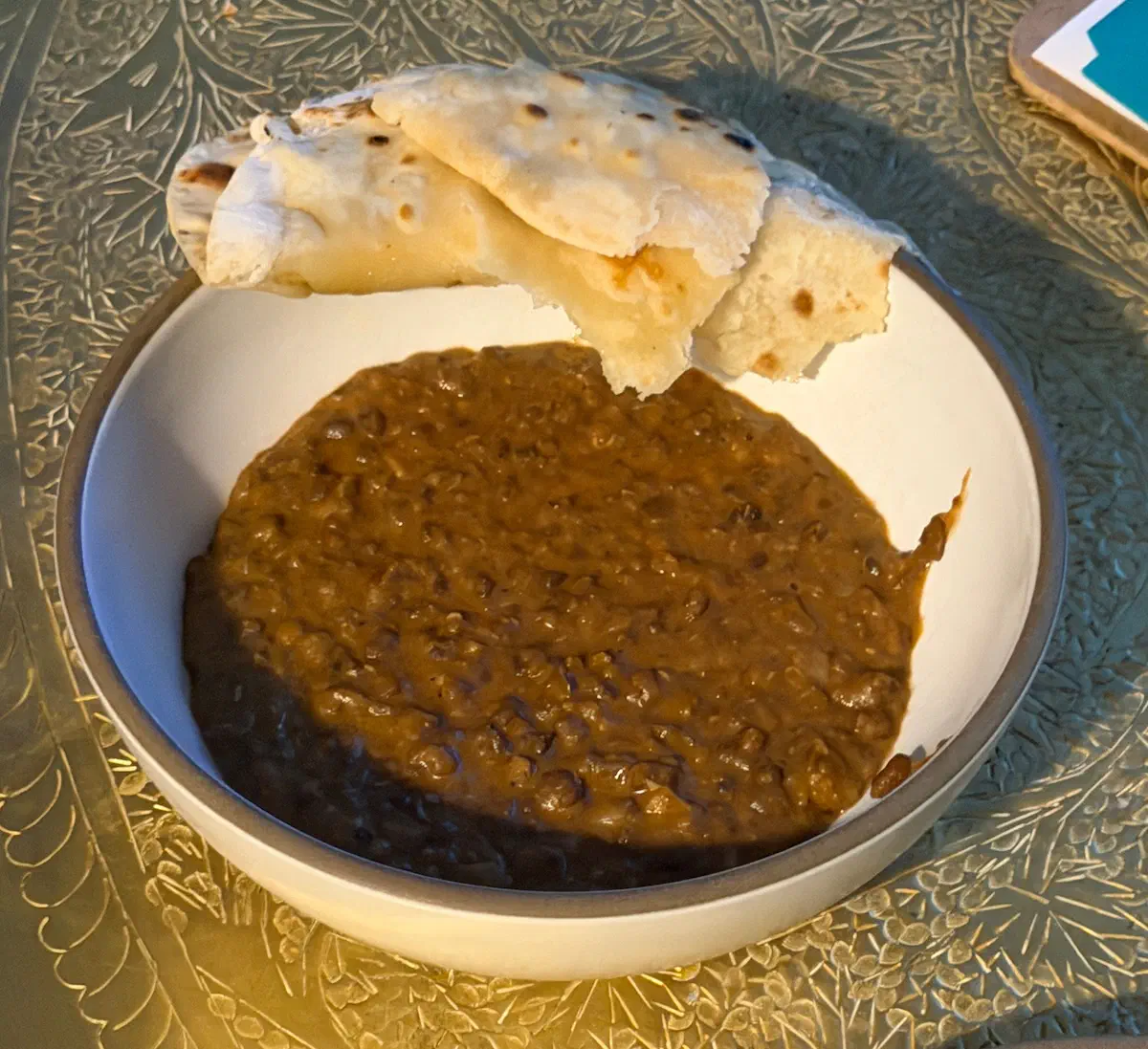
Chapatis
For ~18 small chapatis:
Put 3 cups flour in a bowl (I’ve tried all white flour, this time I used a mix of 1 cup freshly milled and sifted flour and 2 cups all-purpose flour).
Slowly stir in 1 1/4 to 1 1/2 cups water (fresh milled flour is ’thirstier’).
Knead a few minutes until smooth and elastic, let rest 30min under plastic wrap.
Divide into balls but keep under plastic wrap.
Preheat a cast iron pan (best) or a griddle (OK) to medium-high.
Roll out thin round circles (it’s hard to convey the thickness and feel of the dough, it’s just something I’m learning), cook on one side until bubbles appear (~30s?), flip (should see brown spots), brush top with a little ghee, cook until it puffs up. Optionally, finish it with a few seconds on an open gas flame (helps it puff up, adds a bit of char). Keep warm and supplied wrapped in a dishtowel or in a basket.
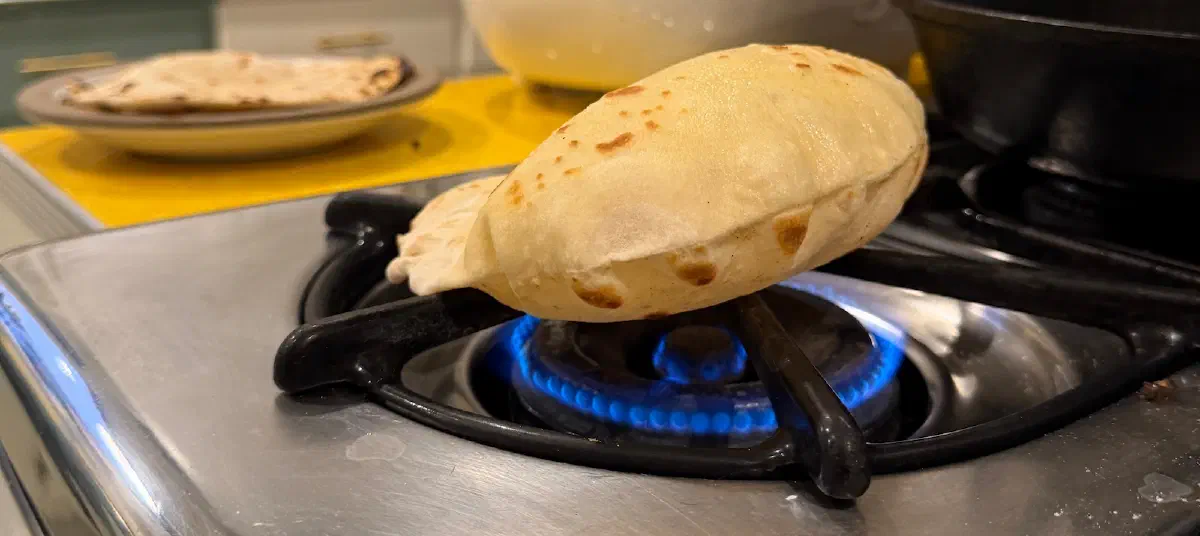
For extra deliciousness, brush with a little ghee and sprinkle salt as you eat them.
Bombay Aloo / Potatoes
Inspired by potatoes we’d had in both India and Sri Lanka, these were delicious and easy to make, spiced with turmeric, cumin, coriander, fresh curry leaf, and garam masala. Generally, the idea is to parboil potatoes, cube them, then fry then with onions and spices, cooking until the water evaporates:
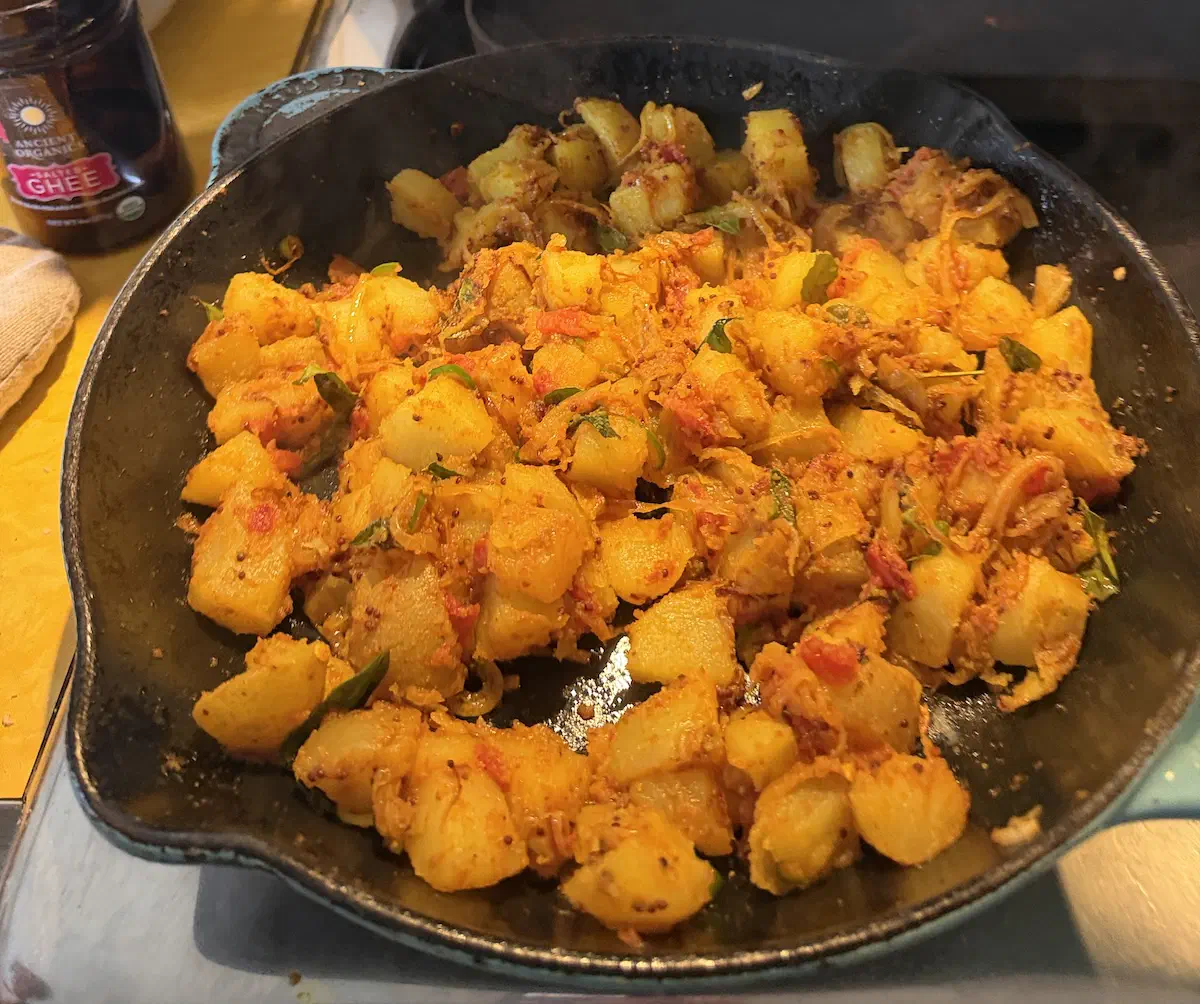
We started with this recipe we found online as inspiration, but winged it (we probably used at least double of all the spices).
Roasted Broccoli
I wanted to add a green vegetable that wasn’t as rich (and which didn’t require hands-on attention or use another burner), so I improvised this:
- Preheat oven to 425F
- De-stem and separate a sheet pan’s worth of broccoli florets
- Toss the broccoli in olive oil, garam masala, ground brown mustard seed, and a bit of salt
- Roast until done (~15 minutes)
Salt Lassis
In the heat of India I enjoyed salt lassis, some of which had a heavy dose of spices like cumin.
I made a decent quick attempt at them here, though again I forgot to take photos:
- Toast equal parts whole cumin and coriander in a small pan until fragrant, then grind
- Mix with salt
- Blend 2 parts yogurt : 1 part water, this spice mix to taste, and a few fresh mint leaves
Conclusion
Overall, this was a successful meal I’d make again. Nothing was too complicated, though the dal took a lot of stovetop time so isn’t really a weeknight meal, and making a large number of chapatis takes a while (but they keep warm well).
Dal makhani also makes great leftovers reheated…